Video has quietly become the first impression most Melbourne businesses make. Before a customer walks into your store, books a consultation, or clicks “buy now,” there’s a good chance they’ve already watched something about your brand online. And in those few seconds, they’re deciding whether you look like a business worth trusting.
That’s where cinematic editing changes the game. Ordinary footage, a bit shaky, a bit flat, cut together in a rush rarely holds anyone’s attention past the first three seconds. But footage shaped by professional video editing feels different. It has rhythm. It has mood. It tells a story instead of just showing clips.
For Melbourne businesses trying to stand out in a crowded digital space, that difference matters more than ever. This article walks through what cinematic editing actually involves, why it’s become essential for brands of every size, and how the right editing partner can turn your raw footage into something people actually want to watch.
What Is Cinematic Editing?
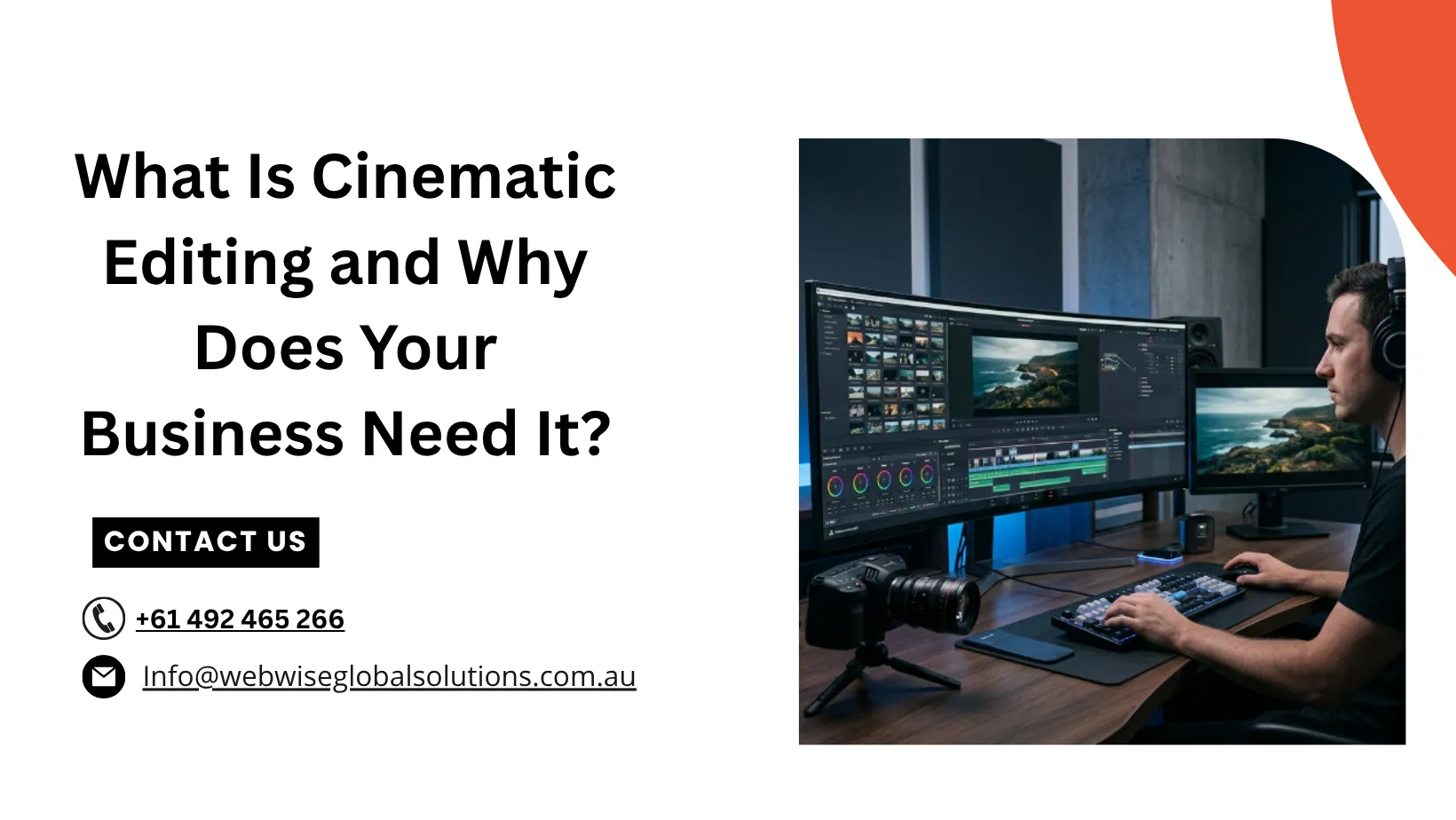
At its core, cinematic editing is the process of shaping raw video footage using the same techniques filmmakers use to create emotion, pacing, and visual polish and then applying those techniques to business content like ads, brand stories, and social videos.
Normal editing usually means trimming clips, adding a few captions, and stitching everything together in the right order. It gets the job done, but it rarely makes anyone feel anything. Cinematic editing goes further. It considers how each cut affects the viewer’s emotional state, how music and pacing work together, and how colour and light guide the eye.
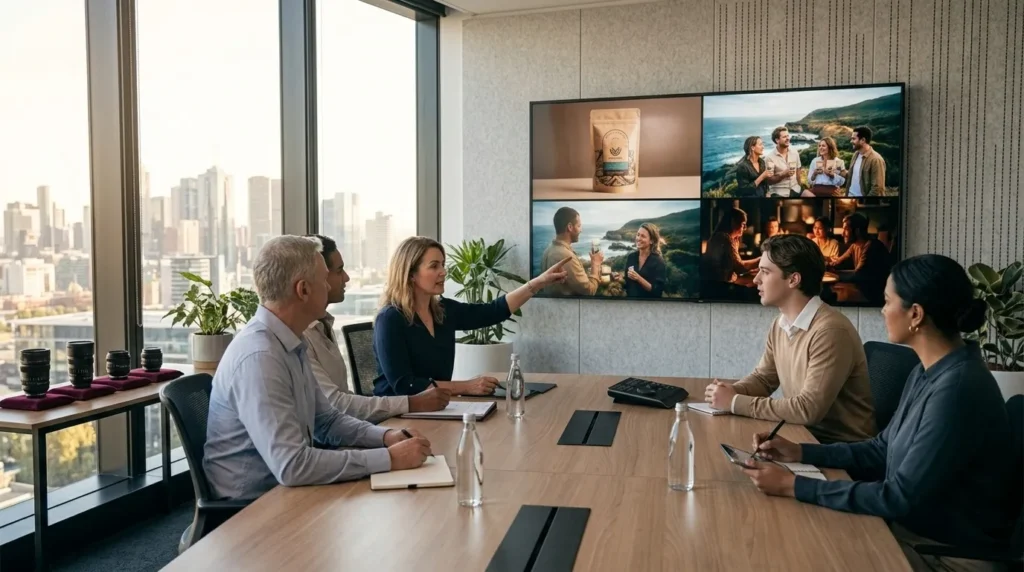
The biggest difference comes down to storytelling. A cinematically edited video has a beginning that hooks the viewer, a middle that builds interest, and an end that leaves an impression. Every transition, every sound cue, and every colour choice supports that arc rather than existing for its own sake.
This is exactly why more businesses are investing in cinematic video production rather than settling for basic edits. A well-told 60-second story can do more for a brand than ten minutes of unstructured footage ever could.
Why Is Cinematic Editing Important for Businesses?
It’s easy to think of video editing as a finishing touch something you do after the “real work” of filming is done. In reality, editing is often where a video succeeds or fails.
Builds brand authority A polished, cinematic video signals that a business takes itself seriously. Viewers subconsciously associate visual quality with product and service quality.
Creates emotional connection People remember how a video made them feel long after they’ve forgotten the details. Cinematic pacing and music are built specifically to create that feeling.
Improves customer trust Rough, poorly lit, badly cut videos can quietly undermine trust, even if the message is good. Commercial video editing done well removes that friction.
Higher engagement Platforms reward watch time. Videos that hold attention longer tend to get pushed further by algorithms on Instagram, YouTube, and Facebook.
Better conversion rates A compelling video on a landing page or ad can be the difference between a scroll-past and a click-through.
Professional appearance Cinematic touches like colour grading and smooth transitions instantly elevate footage shot on a modest budget.
Better marketing ROI Well-edited videos get reused across platforms ads, socials, websites stretching the value of a single shoot much further.
Stronger social media presence Feeds are crowded. A cinematic edit stops the scroll in a way that a plain, unedited clip simply can’t.
Benefits of Cinematic Editing
Beyond the broad business case, there are specific, practical benefits worth understanding.
Professional storytelling Every scene is arranged with intention, so the video guides the viewer rather than leaving them to piece things together themselves.
Better audience retention Careful pacing keeps viewers watching longer, which matters enormously for platforms like YouTube where watch time affects reach.
Improved visual quality Techniques like color correction and color grading transform footage shot in imperfect conditions into something that looks intentional and premium.
Enhanced brand identity Consistent tone, colour palette, and style across videos help a brand become instantly recognizable.
Higher YouTube watch time Cinematic pacing and hooks in the first few seconds are proven to reduce drop-off rates.
Increased social shares People share content that moves them emotionally, visually, or both. Cinematic editing is built to do exactly that.
Better advertising performance Ads edited with cinematic techniques tend to outperform flat, unedited versions in both click-through and completion rates.
More sales opportunities Ultimately, a video that holds attention and builds trust is a video that’s more likely to convert a viewer into a customer.
Essential Elements of Professional Cinematic Editing
Cinematic editing isn’t one single skill it’s a combination of techniques working together.
Storytelling sits at the center of everything else. Without a clear narrative arc, even the most technically polished video will feel hollow.
Color correction fixes inconsistencies in exposure, white balance, and skin tones so footage looks natural and clean.
Color grading goes a step further, applying a deliberate visual mood warm and inviting, cool and corporate, or moody and premium, depending on the brand.
Cinematic transitions move the viewer between scenes smoothly, without jarring cuts that break immersion.
Motion graphics add branded elements like logos, callouts, and animated text that reinforce key messages.
Sound design layers in ambient noise, effects, and subtle audio cues that make footage feel three-dimensional.
Background music sets emotional tone and pacing, arguably one of the most underrated tools in editing.
Audio mixing balances dialogue, music, and effects so nothing competes for the viewer’s attention.
Speed ramping slows down or speeds up footage at key moments for dramatic emphasis.
Visual effects can be subtle light leaks or lens flares or more involved, depending on the brand’s needs.
Text animation brings captions, quotes, and calls to action to life rather than leaving them static.
Scene composition ensures each frame is balanced and visually pleasing, even before editing begins.
Lighting enhancement corrects and improves how footage was originally lit, adding depth and dimension.
Video stabilization smooths out shaky handheld footage so it doesn’t distract from the story.
Types of Videos That Need Cinematic Editing
Almost every kind of business video benefits from a cinematic approach.
Corporate videos need polish to reflect a company’s professionalism and culture.
Brand story videos rely almost entirely on emotional storytelling to connect with an audience.
Promotional videos need pacing and energy to hold attention through a sales message.
Product videos benefit from close-up detail, lighting, and color grading that make products look their best.
Social media reels require fast, punchy editing built for short attention spans.
YouTube videos need strong pacing to maximize watch time and reduce drop-off.
Facebook ads need an immediate hook, since viewers decide within seconds whether to keep watching.
Instagram videos thrive on cinematic color and rhythm suited to a highly visual platform.
Event highlights turn hours of footage into a tight, memorable summary.
Drone videos need smooth transitions and grading to make aerial footage feel cinematic rather than just “footage from above.”
Real estate videos rely heavily on lighting enhancement and pacing to make properties feel aspirational.
Testimonial videos need careful audio mixing so the customer’s voice comes through clearly and authentically.
Educational videos benefit from motion graphics and text animation that simplify complex information.
Training videos need clean, consistent editing so internal teams stay engaged rather than switching off.
How Professional Cinematic Editing Improves Marketing
Cinematic editing doesn’t exist in isolation; it plugs directly into a business’s broader marketing efforts.
In digital marketing, video consistently outperforms static content in engagement and reach. SEO videos that are well-edited keep visitors on a page longer, which search engines interpret as a positive trust signal.
Across social media marketing, cinematic content is simply more shareable, helping extend organic reach without extra ad spend. This directly supports brand awareness, since consistent visual style makes a business memorable amid constant scrolling.
Better editing also drives stronger customer engagement. Comments, shares, and saves tend to rise when content feels genuinely well made. In paid advertising, cinematic quality often lowers cost-per-click by improving ad relevance scores on platforms like Meta and Google.
On-site, video supports website conversion by helping visitors understand a product or service faster than text alone. And in email marketing videos, a well-edited thumbnail and preview can noticeably lift open and click-through rates.
Common Mistakes Businesses Make
Even with good intentions, many businesses undercut their own video content through avoidable mistakes.
Poor lighting is one of the most common issues, making footage look unprofessional no matter how good the editing is.
Bad audio is arguably worse than bad video. Viewers will tolerate average visuals far more than muffled or inconsistent sound.
Weak storytelling leaves viewers unsure what the video is even trying to say.
Too many transitions can feel gimmicky and distract from the actual message.
Incorrect pacing either too slow or too rushed, causes viewers to lose interest quickly.
Over-editing buries good footage under unnecessary effects and filters.
Inconsistent branding across videos confuses audiences and weakens recognition.
Low-resolution exports undo all the hard work put into filming and editing.
Using copyrighted music can lead to takedowns, demonetization, or legal issues, a risk many businesses don’t realize until it’s too late.
Why Choose Webwise Global Solutions?
Melbourne businesses have plenty of editing options, but not all of them combine creative skill with genuine business understanding.
Webwise Global Solutions brings experienced editors who understand both the technical craft and the marketing goals behind every video. The team works with modern editing software and stays current with industry trends, so every project benefits from up-to-date techniques rather than outdated workflows.
What sets the approach apart is a genuine focus on creative storytelling; every video is shaped around what will actually resonate with the intended audience, not just a generic template. Combined with a fast turnaround and affordable pricing, that means businesses don’t have to choose between quality and practicality.
Every project involves custom editing tailored to the brand, rather than a one-size-fits-all package. Being Melbourne-based support means the team understands the local market and can respond quickly when timelines are tight.
Above all, the approach stays business-focused; every editing decision is made with the client’s goals in mind, aiming for high-quality results backed by professional customer service from first inquiry through to final delivery.
Future Trends in Cinematic Editing
The editing landscape keeps evolving, and staying ahead of these shifts matters for any business investing in video.
AI-powered editing is speeding up repetitive tasks like rough cuts and colour matching, freeing editors to focus on creative decisions.
4K & 8K editing is becoming the standard expectation, particularly as more devices support higher resolutions.
Vertical video content continues to dominate, driven by the popularity of Reels, Shorts, and TikTok-style formats.
Interactive videos with clickable elements and branching choices are starting to appear in more sophisticated campaigns.
Motion graphics remain a growing area, especially as brands look for ways to explain complex ideas quickly and visually.
Personalized marketing videos, tailored to individual viewers or segments, are becoming more achievable at scale.
Virtual production, using digital environments instead of physical locations, is opening new creative possibilities even for smaller budgets.
Cloud collaboration is making it easier for teams and clients to review and approve edits in real time, regardless of location.
Ultimately, the biggest trend is automation working alongside human creativity not replacing it. Tools speed up the technical grind, but the emotional judgment behind great storytelling still comes down to skilled editors.
Frequently Asked Questions
1. What exactly does a cinematic editor do? A cinematic editor shapes raw footage into a structured story using pacing, colour, sound, and transitions designed to create an emotional response.
2. How is cinematic editing different from basic video editing?
Basic editing focuses on trimming and arranging clips. Cinematic editing adds storytelling, mood, and technical polish like grading and sound design.
3. How long does cinematic editing typically take?
Turnaround depends on video length and complexity, but most short-form business videos can be completed within a few days to two weeks.
4. Is cinematic editing only for big-budget brands?
Not at all. Many small and medium Melbourne businesses use cinematic editing to make modest footage look considerably more premium.
5. Can cinematic editing fix poorly shot footage?
To an extent, yes. Techniques like color correction, stabilization, and audio mixing can significantly improve imperfect footage, though excellent original footage always helps.
6. What file formats are best for cinematic editing?
High-resolution formats like MP4 or MOV, shot in the highest quality the camera allows, give editors the most flexibility during post-production.
7. Do I need a professional camera for cinematic results?
No. Many cinematic videos today are shot on modern smartphones and elevated significantly through skilled editing.
8. How much does professional cinematic editing cost?
Pricing varies based on length, complexity, and turnaround time, but Melbourne businesses can find options to suit a range of budgets.
9. Can cinematic editing help with social media growth?
Yes. Cinematic pacing and visual quality tend to increase watch time, shares, and overall engagement across platforms.
10. What industries benefit most from cinematic editing?
Real estate, hospitality, retail, corporate services, and e-commerce brands all see strong results, though virtually any business with a visual story to tell can benefit.
Conclusion
Video is no longer a nice-to-have for Melbourne businesses it’s often the very first interaction a potential customer has with a brand. The difference between a video that gets scrolled past and one that gets watched, shared, and remembered usually comes down to the editing behind it.
Cinematic editing turns ordinary footage into something with rhythm, mood, and meaning. It builds trust, strengthens brand identity, and gives marketing content a genuine edge in a crowded digital space.